Beyond the Desert Bloom: Indigenous Foods of the American Southwest
To early European explorers, the deserts of Arizona, New Mexico, and the surrounding Southwest appeared unforgiving—a land of scorching heat, sparse rainfall, and little promise of agriculture. Yet for thousands of years, Indigenous peoples transformed this seemingly harsh landscape into one of North America's most ingenious food systems, cultivating crops and harvesting wild plants uniquely adapted to the desert.
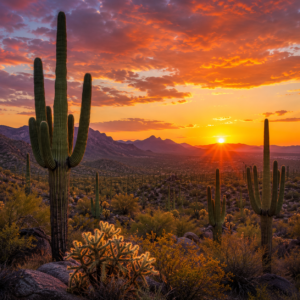
Today, many Americans driving through the deserts of the Southwest still wonder how anyone could possibly survive there. Towering saguaro cacti stand like silent sentinels across rocky hillsides. Mesquite trees twist against an endless blue sky. Rain may not fall for months, and summer temperatures regularly climb well above 100 degrees. To unfamiliar eyes, it is a landscape defined by scarcity.
Yet for thousands of years, Indigenous peoples looked upon that same desert and saw abundance. Rather than attempting to force the land to become something it was not, they learned to live in harmony with its rhythms, cultivating drought-tolerant crops, gathering nutritious wild plants, and making careful use of every precious drop of water. Their knowledge transformed an unforgiving environment into a dependable pantry that sustained generations.
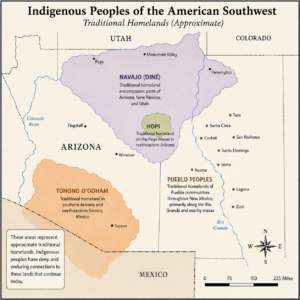
 Among the peoples who mastered this remarkable landscape were the Hopi, the Navajo (Diné), the Tohono O'odham, and Pueblo peoples. Each developed food traditions shaped by the desert's unique resources. Blue corn became far more than a staple grain, mesquite pods were ground into naturally sweet flour, tepary beans flourished where other crops failed, and fruits from the prickly pear cactus provided nourishment during the hottest months of the year. Together, these foods tell a story not merely of survival, but of innovation, resilience, and an intimate understanding of one of North America's most demanding environments. Their success reminds us that abundance is often a matter of knowledge rather than climate. Where outsiders saw an empty desert, Indigenous communities recognized seasons, harvests, and opportunities hidden in plain sight.
The American Southwest has long been home to a remarkable diversity of Indigenous peoples, each adapting to the region's varied deserts, mesas, river valleys, and mountains in unique ways. Among them were the ancestral Hohokam, renowned for engineering extensive irrigation canals centuries before European contact, as well as the Apache, Yuman-speaking peoples, Hopi, Navajo (Diné), Pueblo communities, Tohono O'odham, and many others. While it would be impossible to explore every nation's rich culinary traditions in a single article, the following examples offer a representative glimpse into the ingenuity, resilience, and deep environmental knowledge that shaped Indigenous foodways across the American Southwest.
The foods of the Indigenous peoples of the Southwest were rooted in a careful balance of agriculture, foraging, and hunting. While each nation adapted its diet to the local conditions, many shared similar agricultural traditions. Corn, beans, and squash—the celebrated “Three Sisters”— formed the foundation of many 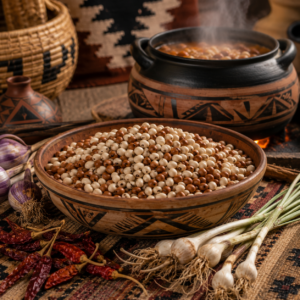 meals, although each community cultivated varieties best suited to its environment. Over centuries, these farmers selected crops capable of thriving despite blistering heat, poor soils, and unpredictable rainfall.
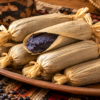
Today, the Hopi Reservation sits entirely within the much larger Navajo Nation in northeastern Arizona. Long before those modern political boundaries existed, however, the Hopi people became masters of dry farming on the high desert mesas, cultivating crops with little more than seasonal rainfall and careful soil management. Among the many varieties of maize they developed, blue corn became especially prized. Rich in flavor and nutrition, it was ground into a fine flour for making the paper-thin piki bread that remains one of the Hopi's most recognizable traditional foods. Blue corn was also used in dumplings, porridges, ceremonial dishes such as somiviki, and other everyday meals.
The Hopi also cultivated tepary beans—one of the world's most drought-tolerant legumes—along with pumpkins, squash, and melons. Their gardens were supplemented by foraged piñon nuts, prickly pear fruit, wild onions, herbs, and other native plants. Desert bighorn sheep, rabbits, and other game supplied valuable sources of protein, creating a remarkably varied diet despite the challenging environment.
Across the Four Corners region—where Arizona, New Mexico, Utah, and Colorado meet—the Navajo or Diné, were historically hunters and gatherers who gradually incorporated farming and, later, sheep herding into their way of life. Their fields produced white, yellow, and blue corn, beans, squash, and Navajo spinach, also known as bee plant, a nutritious leafy green whose leaves 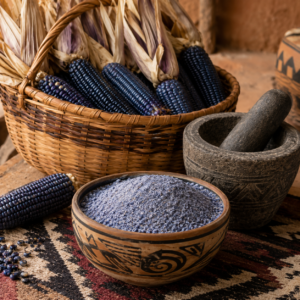 were eaten while its dark pigment was used to dye pottery, baskets, and textiles. The seeds were also ground and incorporated into mushes and breads.
Foraging remained an important part of Navajo life. Piñon nuts, yucca fruit and blossoms, and greenthread—a fragrant native herb whose mild flavor resembles green tea—were gathered seasonally for food and beverages. Like many Indigenous plants, greenthread also held important medicinal value. Skilled hunters supplied venison, rabbit, and other wild game, but after the arrival of Spanish settlers and the introduction of sheep during the sixteenth century, mutton gradually became a cornerstone of Navajo cuisine and remains so today.
Farther south, across the floodplains of the Sonoran Desert, the Tohono O'odham adapted to one of North America's harshest environments. Rather than depending solely on rainfall, they perfected an ingenious floodwater farming system known as ak-chin, planting crops where seasonal monsoon runoff naturally soaked the desert floor. Their principal crops included sixty-day corn, tepary beans, and O'odham squash, all carefully selected for their ability to mature quickly in the desert heat.
Perhaps no people demonstrated the value of desert foraging more completely than the Tohono O'odham. The towering saguaro cactus provided sweet fruit that was eaten fresh or preserved as syrup and jelly. Its juice was also fermented into a ceremonial wine used during traditional rain-calling ceremonies marking the beginning of the summer monsoon season. Cholla cactus buds, rich in calcium and other nutrients, were carefully harvested and prepared as a vegetable with a flavor often compared to green beans, asparagus, or artichoke hearts. Prickly pear fruit and tender pads supplied additional nourishment throughout the year.
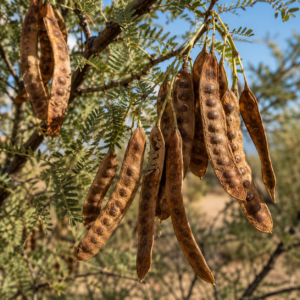
Mesquite pods were another indispensable resource. Once dried and ground into flour, they produced a naturally sweet meal rich in protein, fiber, and minerals that could be stored for months. Wild herbs and the fiery chiltepin pepper added flavor to many dishes, while deer, rabbit, and other desert game completed the Tohono O'odham diet.
 The Pueblo peoples, including communities such as Acoma, Taos, and Zuni, are descendants of the Ancestral Puebloans and have lived throughout the Southwest for thousands of years. Farming villages flourished along river valleys and beneath towering mesas where sophisticated irrigation systems and dry-farming techniques supported thriving communities. Their fields produced white, yellow, red, and blue corn alongside beans and squash, while nearby hillsides yielded piñon nuts, amaranth, wild berries, and native herbs. After Spanish contact, chile peppers became an important addition to Pueblo cuisine and remain deeply woven into the region's culinary identity today.
Although Pueblo hunters pursued deer, rabbits, and bighorn sheep, they also domesticated turkeys long before European contact. The birds supplied both meat and feathers, illustrating once again how Southwestern Indigenous peoples made thoughtful use of every available resource.
What may appear today as an empty desert was, for centuries, a carefully tended homeland whose abundance was understood by those who knew where—and when—to look. Every field of blue corn, every basket of mesquite pods, every harvest of cactus fruit reflected generations of observation, experimentation, and respect for the land.
Many of these traditional foods continue to nourish Indigenous communities while inspiring chefs, historians, and home cooks to rediscover ingredients that are as flavorful as they are resilient. Their story reminds us that some of America's oldest culinary traditions were born not in fertile valleys or lush forests, but beneath the blazing sun of the Southwest, where ingenuity transformed one of the continent's harshest landscapes into a thriving and enduring food culture.