Beyond the Forest Canopy: Indigenous Foods of the Southeastern Woodlands
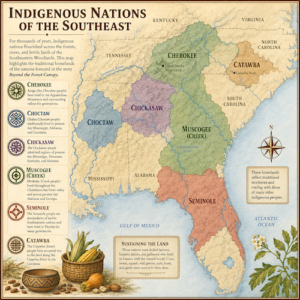
To many Americans, the forests stretching from eastern Texas across the Deep South and into the Appalachian Mountains conjure images of towering hardwoods, winding rivers, and abundant wildlife. But long before European settlers, arrived these woodlands also supported some of the continent's most highly developed Indigenous agricultural societies. The Cherokee, Choctaw, Catawba, Chickasaw, Muscogee (Creek), Seminole, and dozens of other nations cultivated the fertile river valleys, managed forests with controlled burning, and harvested an astonishing variety of wild foods that sustained thriving communities for centuries.
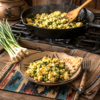
Corn remained the foundation of daily life, but it was only one part of an extraordinarily diverse food system. Beans climbed alongside corn stalks while pumpkins and squash spread across the ground below. Persimmons and pawpaws ripened in autumn, hickory nuts were gathered by the basketful and processed into a rich, nourishing milk, while wild onions flavored stews and roasted meats. Many of these foods—and the techniques used to prepare them—would eventually find their way into Southern cooking, where their influence can still be tasted today in dishes such as hominy, grits, corn breads, pumpkin 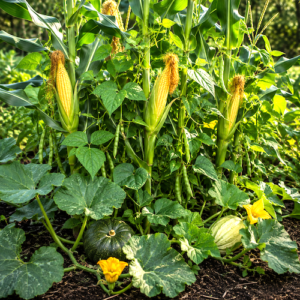 breads, and countless family recipes passed from one generation to the next.
Among the major Indigenous nations of the Southeast, the Choctaw developed an especially rich agricultural tradition. They cultivated extensive fields of corn (maize), beans, and winter squash along the fertile river bottoms of present-day Mississippi and Alabama, often growing these crops together in the complementary planting system commonly known as the “Three Sisters.” Pumpkins, sunflowers, melons, and tobacco were also cultivated, with surplus crops providing food for storage as well as trade with neighboring peoples and, later, European settlers.
Creating fields within the heavily forested landscape required considerable work. Trees could be killed by girdling—cutting through the bark around the trunk—while smaller growth was cut and burned. Fire not only helped clear the land but returned nutrients to the soil through the resulting ash. Similar methods of clearing land would later be used by European settlers throughout the region.
But growing corn was only the beginning. What happened after the harvest reveals just how sophisticated Southeastern Indigenous cooking had become.
Dried corn could be roasted, ground into meal, boiled into porridges and stews, or processed with wood ashes or another alkaline solution to loosen the tough outer hull. The resulting kernels—what we know today as hominy—could be eaten whole or dried and ground again. Preparations such as these were well established long before Europeans entered the region and would eventually become part of the corn-based cooking so closely associated with the American South.
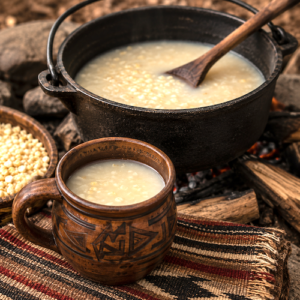 Among several Southeastern nations, including the Muscogee and Seminole, corn also became sofkee, a thin, slowly cooked corn porridge or drink that could be consumed throughout the day. Simple as it might appear to modern eyes, sofkee was more than a bowl of boiled corn. It was a staple food rooted in community and tradition and one of many Indigenous corn preparations that existed generations before corn mush, grits, and similar foods became fixtures on Southern tables.
Beyond the Fields
While corn, beans, squash, and pumpkins were important agricultural staples for the Indigenous nations of the Southeast, the lush forests surrounding their villages and fields provided what amounted to an enormous natural pantry. Knowing what could be eaten, when it would appear, and how it should be prepared was knowledge accumulated over countless generations.
Spring brought tender greens and wild onions. The Cherokee gathered sochan, a leafy green related to the coneflower, while lamb's quarters, watercress, poke, and other seasonal greens supplemented foods 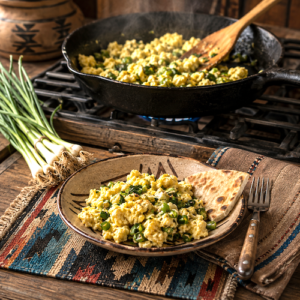 stored from the previous harvest. Wild onions were particularly prized and remain important in Cherokee food traditions today. They could be cooked with other foods or used much as we use herbs and onions today to flavor soups, stews, meats, and vegetables.
As spring gave way to summer, the forests offered berries and other fruits, while rivers and streams provided fish, turtles, and waterfowl. Later in the season came some of the woodland's most distinctive treasures: pawpaws and persimmons. Pawpaws provided a soft, custard-like fruit unlike almost anything Europeans knew, while native persimmons became sweeter as autumn approached. Both could be eaten fresh or incorporated into other foods, and Indigenous peoples also developed methods of preserving these highly seasonal fruits for later use.
Persimmons in particular would survive the transition from Indigenous cooking into the kitchens of later Southern settlers. The fruit eventually appeared in puddings, breads, and other sweets, but Indigenous peoples had been gathering and preserving native persimmons centuries before those dishes acquired the names by which we recognize them today.
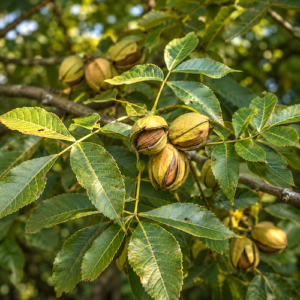 Then came the nuts.
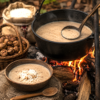
Hickories were among the great food-producing trees of the Eastern Woodlands, and their nuts provided something more valuable than an occasional snack. Hickory nuts could be eaten fresh or pounded and processed to obtain their rich, fatty meat and oils. Among the Cherokee, they became the basis of one of the region's most distinctive traditional foods—kanuchi.
Making kanuchi was labor intensive. Hickory nuts were cracked and pounded until the nutmeats could be worked into a paste, traditionally formed into balls for storage. When needed, the hickory mixture was 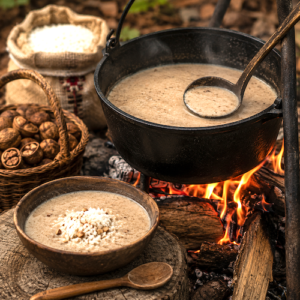 dissolved and cooked in water, producing a rich, creamy soup or drink sometimes described today as hickory nut milk. Depending upon the preparation, it might be eaten by itself or combined with other foods.
To a modern cook accustomed to almond, oat, and other plant-based milks, extracting “milk” from nuts may not seem particularly unusual. But Indigenous peoples of the Southeast were doing just that with native hickory nuts long before Europeans brought dairy cattle into the region. Kanuchi remains a part of Cherokee food culture today.
Pecans and other nuts and seeds were also gathered when available. Sunflowers, meanwhile, were not merely decorative plants. Their seeds supplied another source of food and oil and could be roasted, ground, or incorporated into other preparations.
From Garden to Cooking Pot
The pumpkins and squash spreading beneath the corn and beans in Indigenous fields also deserve more than passing mention. Numerous varieties of squash had been cultivated in the Americas for thousands of years before Europeans arrived.
Summer squash could be eaten while tender, while hard-skinned winter squash and pumpkins had the great advantage of keeping for long periods after harvest. They could be roasted, boiled, added to soups and stews, or dried for later use. Seeds could be roasted or ground as well, meaning very little of the plant needed to be wasted.
Beans provided another important source of nourishment and, when eaten together with corn, helped create a remarkably sustaining diet. The combination was no accident of taste. Generations of Indigenous cooks understood through experience that these foods belonged together long before modern nutritional science could explain why.
 The forests themselves provided still more. Deer supplied venison, while squirrel, rabbit, turkey and other wild game found their way into cooking pots and roasting fires. Rivers and streams yielded freshwater fish, turtles and waterfowl. Hunting, fishing, gathering and farming were not separate food systems but interconnected parts of one remarkably diverse way of eating.
Perhaps that is the most important thing to remember when considering the foodways of the Southeastern Woodlands. These peoples were neither simply hunters wandering through forests nor farmers dependent upon a handful of crops. They were accomplished agriculturalists who also understood how to manage and harvest the world beyond their fields.
A Southern Table Before There Was a South
When Europeans began settling the Southeast, they entered a landscape whose inhabitants already knew what grew well there and what could be done with it. Corn had been planted, harvested, dried, ground and boiled for generations. Beans and squash filled cooking pots. Persimmons and pawpaws were gathered from the woods. 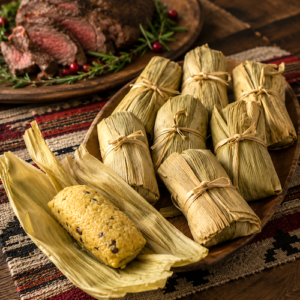 Hickory nuts were transformed into rich, nourishing foods. Game was roasted and stewed, fish came from the rivers, and wild greens returned with the spring.
The newcomers brought their own animals, crops and cooking traditions, of course, and enslaved Africans would later contribute enormously to what eventually became Southern cuisine. Over time those foodways met, mingled and changed one another. But the Indigenous contribution came first.
It can still be found in foods so familiar that we seldom stop to question where they came from: a bowl of grits at breakfast, hominy simmering in a pot, cornbread alongside beans, pumpkin and squash on an autumn table, or persimmon pudding made from fruit gathered after the first cold weather.
We tend to think of these as Southern foods.
And they are.
But long before there was an American South, there were Indigenous cooks tending cornfields, gathering hickory nuts beneath the forest canopy, picking persimmons in autumn, and passing their knowledge of these foods from one generation to the next.
Their table was here first.