Butter, Margarine, and the Changing American Table
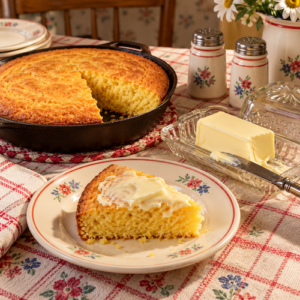
For as long as I can remember, margarine was “butter” in our house. We knew the difference, of course, but butter was butter whether it came wrapped in blocks, sticks, or later scooped from one of those soft plastic tubs. There was almost nothing my father enjoyed more than slathering my momma’s hot cornbread with copious amounts of “butter,” or mixing a glob of it in a pool of sorghum to spread on his morning toast. Real butter was something I remember eating only when we visited my grandma or my Aunt Alta on their farms.
That was rather ironic, because both of my parents had grown up on farms in southeastern Oklahoma where butter wasn't something you bought at the grocery store. They milked the cows, skimmed the cream, and churned their own.
But in the city after World War II, margarine was considerably cheaper than real butter, and families like ours, who had to stretch every dollar, got used to the difference.
We were hardly alone.
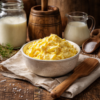
For thousands of years before anyone dreamed of margarine, there was butter. No one knows exactly who first discovered it, and the familiar story of milk accidentally turning to butter while being carried in an animal-skin container on horseback is more legend than documented history. What we do know is that butter could not have existed before humans began domesticating and milking animals. Archaeological evidence shows that people were processing milk thousands of years ago, making butter one of mankind's oldest prepared dairy foods.
Somewhere in the distant past, somebody discovered that agitated cream—whether by accident or intention—creates butter, and generations of cooks have been doing essentially the same thing ever since.
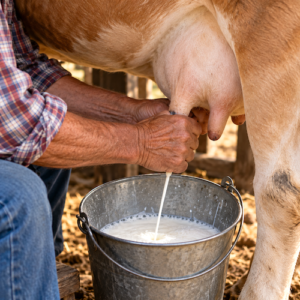 Butter eventually became an important food throughout much of Europe and traveled with European settlers to North America. On American farms, particularly where a family kept a milk cow, making butter became part of the regular rhythm of household life. Milk was allowed to stand so the cream could rise, the cream was skimmed, and churned until the fat globules begin sticking together, eventually separating into butter and buttermilk. That was the world my parents and grandparents knew.
Then along came margarine.
Unlike butter, margarine has a fairly precise birthday. In 1869, French chemist Hippolyte Mège-Mouriès developed an inexpensive butter substitute in response to a challenge from Emperor Napoleon III, who wanted a cheaper fat for the military and working-class people. The early product, eventually known as oleomargarine, bore little resemblance to many of the vegetable-oil spreads we know today. It was originally made largely from animal fat.
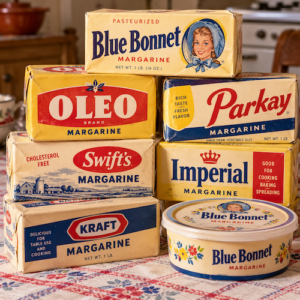 When oleomargarine reached America, dairy farmers and butter producers were hardly delighted to welcome the competition. By 1886, the federal government was taxing margarine, and additional restrictions followed. Yellow margarine—the color consumers associated with butter—was ![]especially controversial. At various times and in various places, laws restricted or taxed the coloring of margarine so it could not easily masquerade as butter. Some Americans consequently remember buying pale or white margarine accompanied by coloring that had to be mixed into it at home.
For decades butter availability remained comfortably ahead. During the first half of the twentieth century, Americans had roughly 16 pounds of butter per person available annually, compared with fewer than 3 pounds of margarine.
Then came World War II.
Butter became scarce, was rationed, and Americans who might otherwise have rejected margarine began using it. Food manufacturers did the same. By the time the war ended, millions of consumers had become accustomed to the substitute.
Price gave them another reason not to switch back.
In 1946, butter averaged about 71 cents a pound while margarine cost only about 23 cents. For a working family watching every dollar, that difference mattered. At the same time, America's enormous soybean industry was producing an increasingly abundant supply of inexpensive vegetable oil ![]from which margarine could be made.
Gradually, the legal barriers also began falling. The special federal taxes and restrictions were repealed in 1950, although labeling requirements remained and some state restrictions lasted longer.
Margarine no longer needed a war to help sell it.
Then it acquired something even more powerful than a lower price: a reputation for being healthier than butter.
As concerns about cholesterol, heart disease, and saturated animal fats grew during the second half of the twentieth century, butter increasingly found itself on the wrong side of America's dinner plate. Margarine, made primarily from vegetable oils by then, was promoted as the modern alternative. Butter was old-fashioned animal fat; margarine was vegetable based and seemed to fit the changing nutritional advice.
Americans responded.
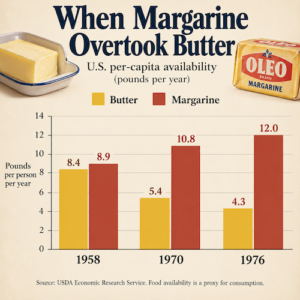 In 1958, margarine availability surpassed butter for the first time. By 1976, margarine had reached about 12 pounds per person annually, while butter availability had fallen dramatically from its prewar levels.
For people of my generation, the change was visible right there in the refrigerator. The hard blocks and sticks gave way to soft margarine sold in plastic tubs, ready to spread straight from the refrigerator. We weren't necessarily thinking about food history or chemistry when we reached for it. It was inexpensive, convenient, and by then we had been told repeatedly that vegetable-based margarine was a sensible alternative to butter.
But the story wasn't over.
The process that made liquid vegetable oils solid enough to become traditional margarine often involved partial hydrogenation. That process could create trans fatty acids, or trans fats. As researchers learned more about them, trans fats presented a serious problem: they raised LDL cholesterol, commonly called “bad” cholesterol, and were associated with increased cardiovascular risk.
Suddenly margarine's healthy halo wasn't quite so bright.
Manufacturers began reformulating their products, and soft margarines made without partially hydrogenated oils became quite different nutritionally from the old hard margarines. Eventually, the U.S. Food and Drug Administration determined in 2015 that partially hydrogenated oils—the major source of artificial trans fat in the American food supply—could no longer be considered generally recognized as safe.
Meanwhile, butter had quietly begun working its way back onto the American table.
Margarine availability had already begun declining during the late 1970s and fell much more sharply beginning in the 1990s. By 2005, Americans once again had more butter than margarine available to them, despite butter still costing more.
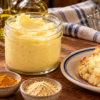
Part of butter's comeback undoubtedly came from the backlash against trans fats, but something else had changed as well. Americans had begun looking differently at food itself. “Natural,” “traditional,” “real,” and “minimally processed” became powerful words in the grocery aisle. Butter had one great advantage in that conversation: people understood what it was.
Cream. Sometimes salt. That's about it.
That doesn't mean butter suddenly became health food. Butter remains high in saturated fat, and nutrition guidance continues to recommend limiting saturated fat as part of an overall healthy diet. Nor does it mean today's margarines are the same products we ate fifty years ago. Many have been reformulated with oils that contain considerably less saturated fat and without the partially hydrogenated oils responsible for most artificial trans fat.
Which makes the old butter-versus-margarine argument considerably less simple than it once appeared.
And now the American butter dish is changing yet again.
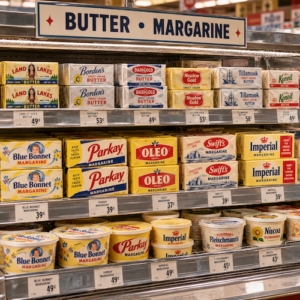 Walk through a supermarket dairy case today and alongside butter and margarine you'll find another generation of spreads marketed as plant-based butter. Depending on the brand, they may be made from combinations of olive, avocado, canola, soybean, coconut, palm, or other vegetable oils. In some ways we've come full circle: once again manufacturers are trying to reproduce the flavor, texture, and usefulness of butter without actually making butter.
Which raises an interesting question.
After more than a century of trying to replace butter, improve butter, make butter cheaper, make it healthier, and make something that tastes enough like butter to satisfy us, perhaps the history of butter and margarine says as much about Americans as it does about what we spread on our toast.
My grandmother probably wouldn't have given it much thought. She had a cow, the cow gave milk, the milk gave cream, and the cream gave butter.
And when I visited her farm, that's what she put on the table.