Montreal Melon: The Giant Fruit That Once Ruled Eastern Markets
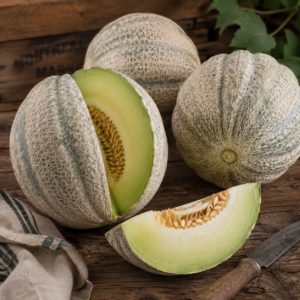
Probably one of my all-time favorite treats is fruit. Any and all kinds of fruit. Whether with breakfast, as dessert, or simply as a snack, few foods are as satisfying as fruit picked at the peak of ripeness. And while berries may, in many ways, be the most versatile—plain, dried, or frozen; in jams, jellies, compotes, and pies—the fruit that tops my favorites list is melon.
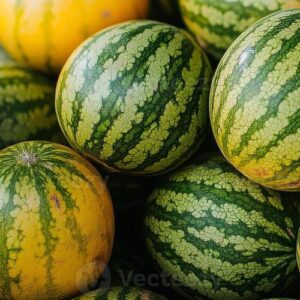 The fact is, I’ve never met a melon I didn’t enjoy. From the many popular Texas varieties such as the iconic Pecos cantaloupe to classic Red Seedless, Jubilee, and Black Diamond watermelons, melons have long been part of summer in my world. I also enjoy Sugar Babies—small, refreshing “icebox” melons perfect for a hot afternoon—along with several varieties of honeydew, including Caravelle, Mission, and TAM Dew. And then there are the more unusual melons, such as the fragrant Israeli Galia melon, whose sweet aroma can perfume an entire kitchen before it is even sliced open.
Still, there is one melon I’ve read about for years yet never had the opportunity to taste because of its rarity. A melon once considered the finest in North America—perhaps even the finest in the world. A melon so prized that a single slice reportedly sold for extravagant prices in elegant East Coast restaurants.
That melon was the Montreal Melon.
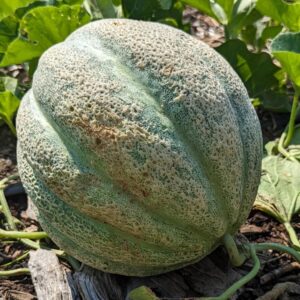 Also known as the Montreal Market Melon or the Montreal Nutmeg Melon, this remarkable fruit was once one of the great agricultural treasures of Canada. During the late nineteenth and early twentieth centuries, wealthy diners in New York, Boston, Philadelphia, and Montreal eagerly awaited its short summer season. Hotels and fine restaurants advertised it by name, and upscale fruit merchants displayed the giant melons like jewels in their shop windows.
And giant they were.
Unlike the cantaloupes most of us buy today, which generally weigh between three and six pounds, Montreal Melons often tipped the scales at twenty pounds or more. Some reportedly reached forty pounds under ideal growing conditions. Beneath their thickly netted rind lay pale green flesh said to be exceptionally sweet, fragrant, and faintly spicy, with a flavor somewhere between honeydew, cantaloupe, and nutmeg. Contemporary descriptions often compared the aroma to flowers and honey.
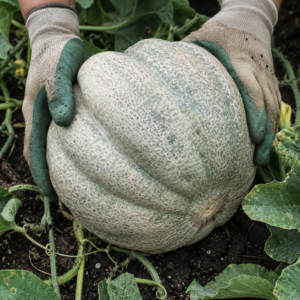 The melon developed in the Montreal district of Notre-Dame-de-Grâce, an area that is now thoroughly urbanized but was once famous for market gardens and small farms. The soil there—rich, fertile, and heavily manured—proved ideal for melon cultivation. Farmers grew the melons with almost obsessive care, frequently starting the plants in hotbeds and hand-pollinating blossoms to ensure quality fruit.
Growing a Montreal Melon was not simple gardening.
The plants required a long growing season, abundant sunshine, careful pruning, and constant attention. Farmers often pinched off excess blossoms so the vines would concentrate their energy into producing just a few spectacular melons. Horse manure was commonly used to create heated growing beds in early spring, helping young plants survive the cool Canadian climate. By harvest season, the melons had become massive, heavily ribbed fruits unlike almost anything seen in modern supermarkets.
Their difficulty to grow and limited availability only enhanced their reputation. By the 1890s, Montreal Melons had become fashionable among wealthy consumers in northeastern cities. Crates were shipped by rail to upscale hotels and restaurants where chefs treated them as luxury items. Some reports claim 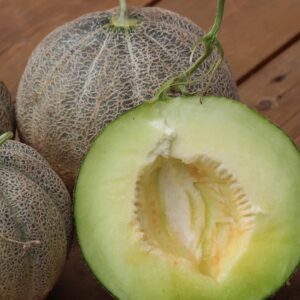 individual melons sold for as much as a dollar apiece at a time when that represented a considerable amount of money. In certain fine dining establishments, a slice of Montreal Melon could cost the equivalent of an expensive entrée.
That may sound exaggerated today, but before refrigeration and modern transportation, obtaining perfectly ripened fruit from hundreds of miles away was far more difficult than it is now. Seasonal luxury foods carried prestige, and much like oysters, hothouse grapes, or imported citrus, the Montreal Melon became a symbol of refinement and abundance.
Newspapers and agricultural journals praised the fruit enthusiastically. Seed catalogs promoted it as one of the finest melons ever developed. Travelers passing through Montreal often sought them out specifically during melon season.
Then, almost as quickly as it rose to fame, the Montreal Melon began disappearing.
Part of the problem was simple economics. While the melons were famous for flavor, they were difficult and expensive to grow. Their enormous size made them awkward to ship. Their thick rinds protected the flesh somewhat, but ripe melons remained fragile and perishable. As commercial agriculture increasingly favored crops that shipped easily and produced reliable yields the Montreal Melon became less practical.
Urban growth also played a major role in its decline.
 The farmland around Montreal that had once nurtured these melons slowly disappeared beneath expanding neighborhoods, streets, and homes. The very soil that had made the fruit famous was steadily paved over. By the 1920s and 1930s, fewer farmers remained who possessed both the land and the specialized knowledge required to grow the melons successfully.
Competition from smaller, more manageable cantaloupe varieties added further pressure. Western growers, especially in places like California and Colorado, could produce large quantities of melons more efficiently and transport them widely by rail. Uniformity and shelf life became more important than extraordinary flavor.
By the middle of the twentieth century, the Montreal Melon had become little more than a memory.
In 1912, Trappist monks in Oka, Quebec crossed the Montreal Melon with a Banana Melon to create the orange-fleshed Oka Melon, a descendant said to retain much of the original melon’s rich flavor and fragrance.
For decades many people believed it had vanished entirely.
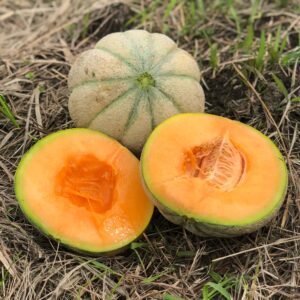 Like numerous heirloom fruits and vegetables, it became a casualty of industrial agriculture’s preference for consistency, appearance, transportability, and profit over uniqueness and flavor. It is a familiar story in food history. The same forces that pushed old apple varieties, regional beans, and heritage corn toward extinction nearly erased the Montreal Melon as well.
Fortunately, that was not quite the end of the story.
In the 1990s, interest in heirloom foods and forgotten agricultural traditions began growing rapidly. Gardeners, seed savers, and food historians started searching for old varieties thought to be lost forever. Among them were researchers in Canada who became fascinated by the legendary Montreal Melon.
The challenge was locating viable seeds.
After considerable searching, seeds believed to descend from the original strain were eventually discovered in seed collections and preserved samples. Growers and agricultural historians began carefully cultivating the melons once again, attempting to restore a fruit that had nearly disappeared from North American agriculture.
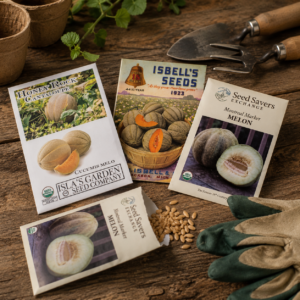
The revival has been modest but meaningful. Though still rare, the Montreal Melon is no longer completely lost. Small numbers are occasionally grown by specialty farmers and dedicated heirloom gardeners. Seeds are now available through certain heirloom seed companies and preservation organizations, allowing adventurous gardeners to try their hand at growing this legendary fruit themselves.
From what I understand, cultivating them still requires patience and attention. They need plenty of warmth, fertile soil, and room to spread. And because the fruits grow so large, many gardeners limit each vine to just a few melons to improve quality. In other words, they remain very much an old-fashioned melon demanding old-fashioned care.
Perhaps that is part of their appeal.
 In a world dominated by standardized produce bred for shipping durability rather than flavor, the Montreal Melon represents something almost romantic. It reminds us of a time when people valued seasonality and locality, when extraordinary foods were tied to specific soils, climates, and communities. It also reminds us how easily such foods can disappear when convenience and commercial efficiency take priority.
The story of the Montreal Melon feels strangely familiar to anyone interested in food history. Time and again, we discover that many of the flavors people once treasured have quietly slipped away—not because they lacked quality, but because they were difficult to mass produce. The old varieties often demanded more labor, more patience, and more risk than modern agriculture wished to tolerate.
Yet every now and then, one of those lost foods returns, offering more than simply something good to eat. It offers a connection to the past—to the farmers who grew it, the markets that sold it, and the families who eagerly awaited its season each year.
As for me, the Montreal Melon remains something of a culinary mystery. I’ve read the descriptions, admired the photographs, and listened to gardeners describe its remarkable sweetness and perfume. But I still have never tasted one.
That may soon change.
Having discovered where to acquire seeds for this obscure old melon, I’ll be planting some next season so I can finally taste for myself the fruit that once captivated the finest tables of eastern North America.