From Pont Neuf to Main Street: The Rise of the French Fry
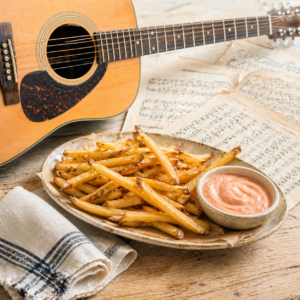
While I love potatoes in just about every way I’ve had them prepared—baked, mashed, pan-fried, stewed, or roasted—my absolute favorite rendition is the French fry. So much so that, as a high school teen, my musically inclined friends and I would gather for jam sessions at each other’s homes where fries were always—and I do mean always—the go-to snack. And if that weren’t enough, we enjoyed an order slathered in ketchup almost every day for lunch.
We were—and I still am—among the roughly 80% of Americans who enjoy French fries regularly, consuming an average of about 15 to 20 pounds per person each year. Not bad for a humble potato dropped into hot oil.
After the Spanish introduced the potato to Europe in the 16th century, its acceptance across the continent was slow. Early varieties were sometimes bitter, and suspicion lingered that the plant might be poisonous—after all, it belonged to the nightshade family. In some regions, it was even relegated to livestock feed.
But the potato had one undeniable advantage: it could thrive in poor soil and produce a high-calorie yield. Over time, practicality won out, and it became a staple across much of Europe, particularly in France and Belgium.
And that’s where the story gets a little murky.
Many historians point to the region around Namur, Belgium, where locals accustomed to frying small fish are said to have turned to potatoes during a harsh winter—often cited as the late 1600s—when the Meuse River froze and fish became scarce. They sliced potatoes into strips and fried them as a substitute.
Others argue that the true origin lies in Paris, where street vendors along the Pont Neuf—the city’s oldest bridge—sold fried potatoes known as pommes Pont-Neuf.
Whichever story you prefer, one thing is certain: the appeal of fried potatoes spread quickly and has never really slowed down.
Fried Potatoes in America
 Thomas Jefferson, while serving as U.S. minister to France in the late 1700s, developed a deep appreciation for French cuisine. Among the dishes that caught his attention were pommes de terre frites—potatoes fried while raw and cut into small pieces.
In 1802, during his presidency, Jefferson served potatoes in the “French manner” at a White House dinner, helping introduce the dish to American society. His enslaved chef, James Hemings—who had trained in France—likely played a key role in refining and preparing these dishes.
A version of fried potatoes later appeared in The Virginia Housewife by Mary Randolph, a relative of Jefferson, in 1824:
Peel large potatoes, slice them about a quarter of an inch thick… fry them in lard or dripping… keep moving them till they are crisp…
Not quite the fries we know today, but clearly part of the same culinary lineage.
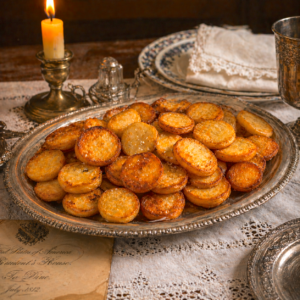 The term “French fried potatoes” appeared in 19th-century cookbooks, including Cookery for Maids of All Work. By the early 20th century, American soldiers stationed in Belgium during World War I encountered fried potatoes served by French-speaking locals and began calling them “French fries”—a name that stuck.
There’s also a culinary explanation: to “French” something can mean to cut it into long, thin strips.
Interestingly, Jefferson’s fries were likely closer to thin rounds. It wasn’t until the 19th century that the familiar elongated shapes—allumettes (matchsticks) and thicker cuts like pont-neuf—became standardized in France and spread across Europe.
It’s All About the Cuts
As the French fry evolved from a simple fried potato into something more deliberate, cooks began to understand that how a potato was cut mattered just as much as how it was fried. Shape, it turns out, isn’t just about appearance—it determines everything from texture to taste.
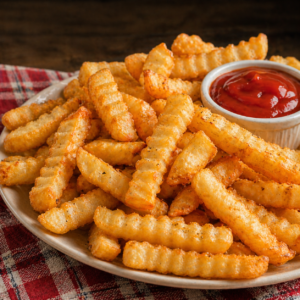 In the early days, potatoes were often sliced into rounds or rough pieces, much like those described in Mary Randolph’s The Virginia Housewife. But by the 19th century, particularly in Paris, a quiet refinement began to take place. Vendors and cooks experimented with cutting potatoes into long, even strips—some thin as matchsticks, others thick and substantial. These weren’t just aesthetic choices. They changed the eating experience entirely.
 The slender allumettes, or what we might call shoestring fries today, offered a delicate, uniform crispness from edge to center. Thicker cuts—what the French associated with the Pont Neuf—delivered something different: a crisp exterior that gave way to a soft, almost creamy interior. Two approaches, both rooted in the same potato, yet yielding entirely different results.
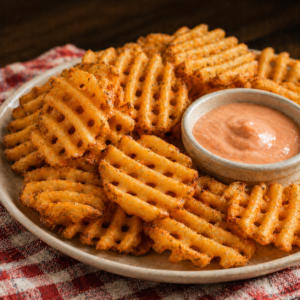
Over time, these variations multiplied. Some cooks left the skins on for a more rustic flavor, creating what we now think of as natural-cut fries. Others leaned into heft, producing thick steak fries meant to accompany a good piece of beef. And somewhere along the line came the more playful interpretations—crinkle-cut, waffle, even spiral-cut fries—each one adding texture, novelty, or simply a new way to hold onto a bit more salt.
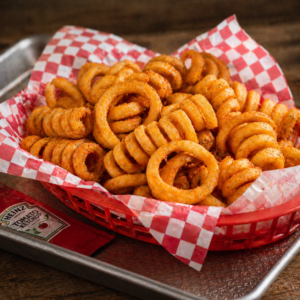 What all of these cuts have in common is this: the more surface area exposed to hot oil, the more opportunity for crispness. It’s a simple principle, but one that has shaped the way French fries have been prepared and enjoyed for generations.
And whether you prefer them thin and shattering or thick and tender, that choice begins not in the fryer—but with the knife.
What Potato Makes the Best Fries?
Long before cooks began debating technique, they came to understand a quieter truth: not all potatoes are created equal—at least not when it comes to frying.
In the earliest days, the choice of potato was often dictated by what was available. But as the French fry became more refined, cooks started to notice that certain varieties behaved differently in hot oil. Some browned too quickly, others held too much moisture, and a few seemed to strike just the right balance.
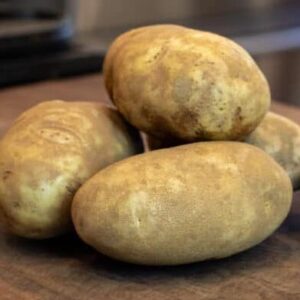 High-starch potatoes, like the Russets grown throughout the American West, proved especially well-suited to frying. Their relatively low moisture content allowed the exterior to crisp while the interior turned light and fluffy—qualities that would come to define what many of us now think of as the ideal French fry.
Other varieties found their place as well. Yukon Gold potatoes, with their naturally buttery flavor and slightly denser texture, produce a fry that is a bit richer and more golden in color. And in some kitchens, particularly those focused on precision, varieties like Kennebec are favored for their balance of starch and sugar, offering a consistent and reliable crispness.
What these choices reflect is not just preference, but intention. The potato you select shapes the final result as surely as the cut or the cooking method. A crisp, airy fry begins long before it meets the oil—it begins in the field, with the variety itself.
And like so much of cooking, the “best” choice is less about rules and more about the experience you’re after.
The Cooking Process Is Critical
For all the discussion about origins and cuts, the true character of a French fry is revealed in the cooking. And like many things in the kitchen, what seems simple at first glance—dropping a potato into hot oil—turns out to be anything but.
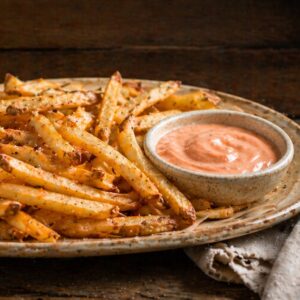 Somewhere along the way, cooks discovered that frying a potato once was not enough. A single pass through hot oil might cook it through, but it rarely delivered that balance of crisp exterior and tender interior that defines a truly good fry. The solution, whether arrived at by accident or careful observation, was the method still used today: frying the potato twice.
The first frying, done at a lower temperature, is less about color and more about transformation. In this stage, the potato softens, its interior cooking gently while the exterior remains pale and unassuming. It is, in many ways, preparation rather than completion.
Then comes the pause. The fries are lifted from the oil and allowed to rest—sometimes briefly, sometimes for hours. During this time, something subtle but important happens. Moisture redistributes, the surface dries, and the potato settles into itself, ready for its final encounter with heat.
The second frying is where the magic happens. Hotter oil, a shorter time, and suddenly the exterior takes on that familiar golden color, crisping into a delicate shell that gives way to a soft, almost fluffy interior. It’s a contrast that feels simple when you eat it, but is anything but accidental.
Seasoning, too, has its moment. Salt, added immediately after the fries leave the oil, clings to the surface while it is still dry and receptive—another small detail that separates a good fry from a forgettable one.
Over time, these techniques have become less discovery and more tradition—passed from cook to cook, kitchen to kitchen—until they feel almost instinctive. But every truly good French fry still depends on them.
Sauce Makes a Difference
In Belgium, fries are often served with mayonnaise or a tangy sauce like Andalouse. The French lean toward mayonnaise or Dijon mustard. In Germany, curry ketchup and rot-weiss 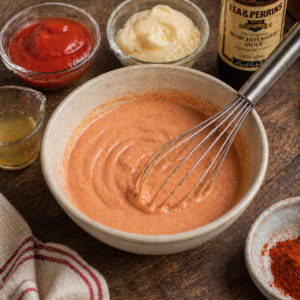 (ketchup and mayo) are popular, while the British favor malt vinegar.
In the United States, more than 80% of people stick with ketchup—simple, familiar, and hard to argue with.
But if you want to elevate your fry game, consider this Western favorite—often called “fry sauce,” especially in Utah:
Whisk together ½ cup mayonnaise and ¼ cup ketchup.
Add 1 tablespoon pickle brine (or vinegar) and 1 teaspoon Worcestershire sauce.
Stir in ½ teaspoon garlic powder and ½ teaspoon smoked paprika.
Season with salt and pepper to taste.
Refrigerate for at least 30 minutes before serving.Refrigerate for at least 30 minutes before serving.
You can adjust it to your liking with a little hot sauce, mustard, onion powder, or even a touch of barbecue sauce.
And maybe that’s part of the reason the French fry has endured as long as it has. For all its history—its journey from European riversides to Parisian streets, from Thomas Jefferson’s table to 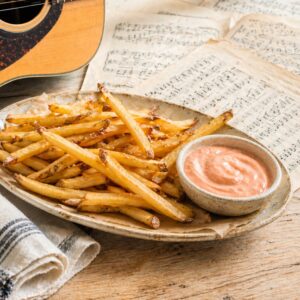 diners and drive-ins across America—it remains, at its heart, a simple pleasure.
I still think back to those afternoons—a group of teenagers gathered around guitars and amplifiers, a paper sack of fries never far from reach. We didn’t know—or much care—where they came from. What mattered was that they were hot, crisp, and shared among friends.