articles
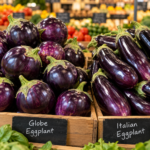
There are hundreds of cultivated eggplant varieties,
differing in size, shape, color, texture, and flavor. And
although we cook eggplant as a vegetable, botanically it
is a fruit—specifically, a berry.
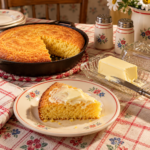
After more than a century of trying to replace butter, improve butter, make butter cheaper, make it healthier, and make something that tastes enough like butter to satisfy us, perhaps the history of butter and margarine says as much about Americans as it does about what we spread on our toast.

As a chef, I never gave much thought to when the people being fed have virtually no choice about what, when, or how they eat. That changed when my sons went to prison.
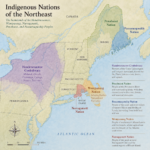
The Indigenous foods in the Northeast were not discovered by Europeans when they arrived on the Atlantic shore. They were part of well-established food systems developed over countless generations by people who understood the country long before newcomers.
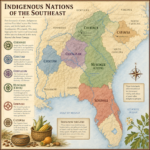
Long before European settlers, arrived these woodlands also supported some of the continent’s most highly developed Indigenous agricultural societies.
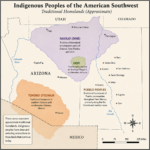
Today, many Americans driving through the deserts of the Southwest wonder how anyone could possibly survive there. Yet for thousands of years, Indigenous peoples looked upon that same desert and saw abundance.
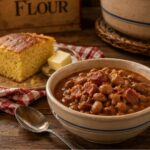
Today, many of the sandwiches in this story have nearly vanished from the American table. Younger generations have never heard of some of them, while others survive only as memories shared by grandparents. Yet each tells a story about the people who ate them and the times in which they lived.
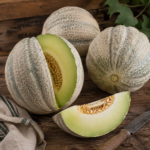
Montreal Melon, or Montreal Nutmeg Melon as it is sometimes called, is a remarkable fruit, once one of the great agricultural treasures of Canada. During the late nineteenth and early twentieth centuries, wealthy diners in New York, Boston, Philadelphia, and Montreal eagerly awaited its short summer season. Hotels and fine restaurants advertised it by name, and upscale fruit merchants displayed the giant melons like jewels in their shop windows.
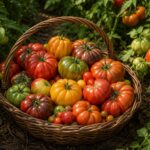
Whether the tomato sandwich truly inspired tomato pie may never be fully proven. Like many regional dishes passed from one generation to another, its origins have become blurred over time.

American goulash, sometimes referred to as slumgullion, likely owes its origin to Hungarian goulash. About the only thing the two dishes have in common is that they both contain meat and paprika.
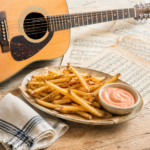
Roughly 80% of America enjoys French Fries on a regular basis, consuming an average of about 15 to 20 pounds per person each year.But what is the origin of this humble potato dish.
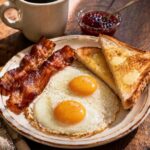
Bacon and eggs weren’t always breakfast.
For centuries, they were simply food—eaten when available, not confined to the morning table. It wasn’t until the early 20th century that the idea of a “proper” breakfast began to take hold, shaped as much by culture and industry as by tradition.

Before modern conveniences found their way into the kitchen, there was a rhythm to cooking—one shaped by fire, patience, and the steady hands of grandma’s who knew no other way.

Across forests, prairies, rivers, and deserts, Indigenous communities developed foods that could withstand hard travel, lean seasons, bitter cold, and long journeys. No printed labels, no measuring spoons, no standardized recipes—only observation, patience, and knowledge carried forward from one generation to the next.
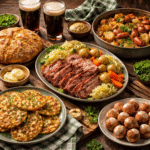
St. Patrick’s Day is often celebrated with parades, green decorations, and the familiar plate of corned beef and cabbage—but long before green beer and the festive parades Irish immigrants were quietly shaping America’s foodways. From potatoes and soda bread to whiskey distilling and hearty boiled dinners, Irish immigrants left behind a culinary legacy that still flavors our kitchens today.
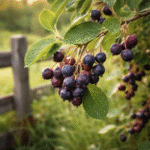
Before blueberries were branded and shipped coast to coast, another native berry ripened quietly along fence lines each June. The Juneberry once fed a young nation — and now waits patiently to be remembered.

From paste-and-glitter valentines exchanged in elementary classrooms to candlelit dinners shared at home or out on the town, Valentine’s Day in America has always been as much about ritual and memory as it is about romance.

Some history about five retro desserts–some you may remember fondly, and others may never have tasted at all.

A conversation about Christmas plans turned into an unexpected journey into the history of wassail — a drink once shared by orchard keepers, carolers, and families gathered on Twelfth Night. What began as curiosity became a rediscovery of an almost forgotten holiday ritual.
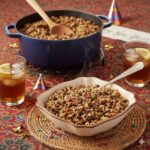
For generations, black-eyed peas and greens have carried more than flavor to New Year’s Day tables—they’ve carried hope. Rooted in history and strengthened by family tradition, this humble meal has become a quiet ritual of resilience, prosperity, and new beginnings.
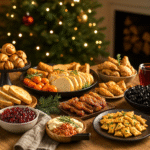
Discover how Christmas dinner varies across America—from New England seafood feasts to Southwest tamales—in this nostalgic look at regional traditions.

Over the centuries, eggnog has traveled a long road from its European beginnings to its place on American holiday tables. Its story is one of adaptation, abundance, and tradition, reflecting how a simple mixture of eggs, milk, and spirits became a symbol of seasonal cheer.
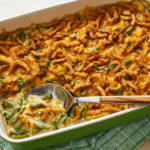
This year, an estimated 20 million American households will be serving Campbell’s classic green bean casserole as part of their Thanksgiving festivities.

In the 1940s through the ’60s, a trip to the grocery store wasn’t complete without a stop at the cold-cut case. Bologna, olive loaf, and liverwurst were more than sandwich fillings—they were part of the rhythm of everyday life.
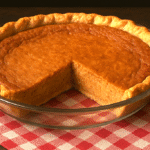
Pinto bean pie, a uniquely Southern dessert that found a home in Appalachian cooking, is reminiscent of sweet potato or pumpkin pie.

Chicken and dumplings carries a history as rich as the broth it’s cooked in. From European kitchens to Southern farm tables, this humble yet celebratory dish has been simmering in American culture for generations.
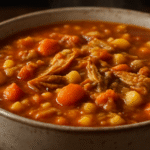
Brunswick stew’s rich history blends folklore, regional pride, and a good dose of friendly rivalry over who made it first—proof that a bowl of stew can be as much about heritage as it is about flavor.
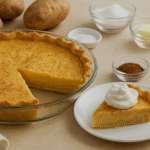
White potato pie has been a cherished Maryland dessert, particularly on the Eastern Shore, for generations.
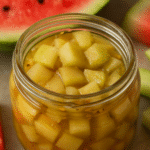
From family farm gatherings to centuries of culinary tradition, watermelon rind pickles tell a story of resourcefulness, resilience, and sweet-sour summertime flavor.

Before apple pie became the patriotic symbol we know today, early American cooks baked something far more old-world and unexpected: Marlborough Pie. This forgotten New England favorite was made, remarkably, with apples on the verge of spoiling.

Gooseberries live in that curious category of half-memory, passed down through family stories of a past I never knew. And though gooseberries have all but vanished from most American kitchens, the memory of them lingers.

From farmhouse kitchens to 1970s diet plates, this humble, curdy concoction has long been a quiet staple of American food culture. Though it fell out of favor during the yogurt craze, its story is one of surprising resilience, and its comeback is nothing short of remarkable.

In America, baked bean dishes, including pork and beans, are thought to have began with the indigenous Penobscot, Narragansett, and Iroquois tribes, who slow-cooked beans in clay pots buried in holes filled with hot stones.

American pokeweed is a flowering herbaceous perennial plant belonging to the Phytolaccaceae family. And while the leaves and stalks of this species are a nutritional powerhouse, high in vitamin A, C, iron, and calcium, its high toxicity will make humans extremely ill (perhaps even fatal) if not properly cooked.
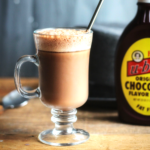
For the uninitiated, egg creams, despite their name, contain neither eggs nor cream.
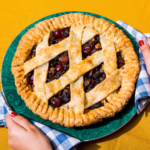
Of all the pies my momma baked during the holiday season, there was one very special pie she made just for herself . . . her Christmas mincemeat pie.

It was 1812 America when Philadelphia scientist and horticulturist James Mease created the first tomato ketchup, but it was H. L. Heinz that turned it into a global condiment.

The Great Depression brought with it a number of major changes in the American food scene — how to acquire food, how to make it last, and how to turn the available limited ingredients into tasty, nutritious meals.

Bread is one of the oldest, most important, yet perhaps the most presumed foods in the world. In its simplest form, bread is wheat flour and water formed into a shaped dough and baked.

Over the past two centuries, the worldwide marketplace has seen the development of hundreds of soft drink brands. While many have enjoyed lasting success, many more have fallen to the wayside.

1795 Nicholas Appert discovered how to preserve foodstuffs for long period of time, although it took 14 years of trial and error. Yet it took another 50 years before anyone knew why the Appert’s method worked.

Waffles are the second most popular breakfast food after pancakes, with 45% of American’s breakfast eaters claiming waffles are their go-to dish.

The term “Brunch” may have been created by British author Guy Beringer, it was on this side of the pond that its popularity grew.
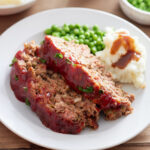
The versatility of meatloaf has been a key to its longevity. A classic comfort food, once just a way for housewives to stretch their food budgets, that has found its way to the menus of diners and restaurants everywhere.
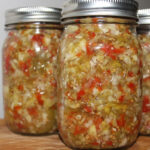
Chow-chow is a popular pickled vegetable relish with roots in the American South, from Virginia and the Carolinas, across Kentucky and Tennessee, to Arkansas, Louisiana, and even parts of Texas and Oklahoma.
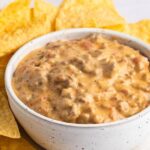
Velveeta was invented in 1918 by a Swiss immigrant and employee of New York’s Monroe Cheese Company, probably the most successful North American cheese maker at the time.

The hot dog consists of a boiled, steamed, or grilled sausage, known as a wiener or frankfurter, tucked into a specially designed bun, usually dressed with condiments or toppings that can vary depending on your country, state, or locale.

Forty percent of all food produced in the U.S. is wasted and ends up in the landfill, although much of it is perfectly fine to eat.
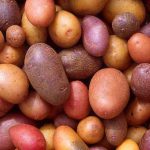
Grown commercially in thirty states, potatoes are the leading vegetable crop in the United States, with Idaho producing the most by far.

Diners can be traced back to Walter Scott, a newspaper pressman at the Providence Journal who, in 1872, left the presses to sell late night coffee and sandwiches from a horse-drawn wagon.