Peas, Greens, and Hope: The New Year’s Tradition That Endures

Growing up in our household, there was never anything unusual about a meal built around beans or peas, a skillet of hot cornbread, and whatever side vegetables happened to be available. Those were everyday foods—simple, filling, and familiar. But on New Year’s Day, those same humble ingredients stepped into a much bigger role. On that one day, the peas and greens on our plates meant more than sustenance. They carried a quiet hope: the beginning of a new year, and—if tradition held—a more prosperous one than the year before.
Looking back, it wasn’t always easy to measure how much better our circumstances became from one year to the next. Life didn’t change overnight just because we ate our “good luck meal.” But over time, I can say with certainty that our lives did improve—far more than I could have imagined as a child staring down a bowl of black-eyed peas. Maybe it was faith, maybe it was hard work, and maybe it was a little bit of both. But those New Year’s meals became markers of progress, reminders that hope often starts in the smallest, simplest places.
So what is it that makes this New Year’s Day meal so important to so much of America?
 Every New Year’s Day, long before the resolutions are settled or the last ornament disappears back into its box, the kitchen takes center stage. In many American homes—especially throughout the South—the first meal of the year isn’t just breakfast or dinner. It’s a quiet ritual of hope and memory, carried by two humble ingredients: black-eyed peas and greens. Together, they make a promise for the year ahead, a small but enduring bit of folklore that has survived war, hardship, migration, and the shifting tides of American life.
Black-eyed peas, with their soft, earthy flavor and unmistakable little “eye,” have been tied to good luck for generations. Their story begins long before they landed on Southern tables. Originally from West Africa, black-eyed peas traveled across the Atlantic in the hands and memories of enslaved people, who used them for sustenance and as a cultural anchor in a strange and brutal new world. During the Civil War, legend holds that Union troops raiding Confederate food supplies ignored the peas—considering them livestock feed. What they left behind unintentionally became a source not just of nourishment, but of survival. Afterward, those simple peas took on new symbolic weight: endurance, resilience, and the possibility of better days to come.
 By the time the Reconstruction era reshaped Southern life, black-eyed peas had firmly settled into the New Year’s tradition. A pot of Hoppin’ John—peas simmered with onions, a bit of pork, and served over rice—became the edible equivalent of a wish whispered toward the future. The peas stood for coins, the flavor for comfort, and the act of eating them for faith that the coming year might just be kinder than the last.
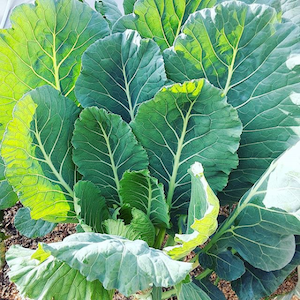 The greens that accompany them carry a symbolism as straightforward as the color itself. Collards, mustard greens, or turnip greens—whichever happened to be growing out back or available at the market—were said to represent folded bills. Eat your greens on New Year’s, and you invite prosperity. The tradition likely grew from a mix of practicality and imagination. Greens were inexpensive, plentiful in the South’s winter gardens, and nourishing. But to a family scraping by, the idea of transforming a plate of stewed collards into a wish for financial luck must have been irresistible. Over time, that hopeful metaphor stuck, and it still clings to stovetops each January.
There’s also something deeper at work—a belief that starting small is its own form of optimism. Black-eyed peas and greens are not glamorous. They aren’t celebratory in the Champagne-and-fireworks sense. But every new beginning benefits from something steady, familiar, and quietly comforting. A pot of peas bubbling on the stove does the job nicely. So does the fragrant steam from a skillet of greens, cooked down with a little onion and whatever piece of pork the cook had on hand.
 Across generations, even as recipes change and families scatter, the symbolism remains sturdy. For some, these foods recall childhood kitchens—mothers or grandmothers directing the New Year’s meal with gentle insistence, reminding everyone that you can’t start the year without “your peas and your greens.” For others, especially those rediscovering Southern foodways or inheriting them by marriage or geography, the meal becomes a kind of adopted folklore—an edible handshake with the past.
What makes the tradition so enduring isn’t simply the promise of good luck or money. It’s the recognition that ritual—especially inexpensive, communal ritual—helps tether one year to the next. It tells us that despite whatever storms passed through the previous twelve months, we are still here, still cooking, still hopeful enough to lean into a superstition born generations before us.
And so, every January 1st, households from Mississippi to North Carolina, from Texas to Tennessee, and far beyond the borders of the South ladle black-eyed peas into bowls and serve tender greens alongside. It’s a modest feast, but a meaningful one. A reminder that luck often begins in the simplest of places. A nod to history. A whisper of hope. And, as ever, a good meal to begin the year.