Homemade Butter
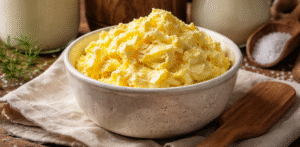
I fondly remember my grandma rising just before sun-up each morning, going to the barn to milk her two Jersey cows, then setting the milk on a table on the back porch, where it would sit undisturbed through the day. As it rested, the cream rose slowly to the top. By afternoon, she would skim that cream into a stoneware butter churn, where I would churn it until the butter began to form—soft yellow clumps gathering against the dasher.
Once the butter had come together, she would separate it from the buttermilk, rinse it well with cold water, and set it aside. The buttermilk—thin, fresh, and only lightly tangy—was saved, sometimes for baking, and sometimes for drinking straight from a glass.
Here’s how you can make fresh butter for your family to slather on bread, pancakes, and biscuits—and traditional buttermilk as a bonus.
Recipe makes about ½ pound (1 cup) of butter
Whatcha Need
- 1 pint (16 ounces) heavy cream (36-40% milk fat), not ultra-pasteurized
- ½ teaspoon natural sea salt (optional)
Whatcha Do
- Pour cream into a quart canning jar, cover with a clean kitchen towel, and let sit at cool room temperature (not refrigerated) for 12-24 hours.
- Secure the lid tightly. Shake vigorously until whipped cream forms, then continue shaking.
- Watch as cream “breaks” and separates into butter solids and liquid.
- Strain off the liquid—this is your traditional buttermilk.
- Rinse the butter well in cold water until the water runs clear.
- Fold in sea salt, if using, until well combined. Shape butter as desired and refrigerate.
Notes
-
Alternate butter-making vessels:
Glass Dazey butter churn (available online) - Hand-churn cream until separation occurs
Stand mixer - Using the whisk attachment, increase speed gradually to medium-fast and mix until separation occurs- Milk cannot be used; butter requires the higher fat content of cream
-
Recipe can easily be doubled
-
Washing butter helps preserve it, as does salting
-
Butter may be wrapped airtight and frozen