Five All-But-Forgotten Mid-Century Desserts America Once Loved

Last week, while clearing out some personal “treasures” stored in my attic, I came across an envelope containing a number of my momma’s old recipes—some written on scraps of paper and used envelopes, a few typed on index cards, others clipped from magazine articles. Among them were two that especially caught my eye. One, handwritten on a faded piece of notebook paper, was grandma Etchieson’s recipe for applesauce cake. The other was one for prune whip, clipped from an unidentified magazine.
Now as I’ve noted in previous stories, my momma was a fantastic home cook and baker who prepared a variety of tasty, memorable desserts for her family. However, I can’t recall her ever making an applesauce cake, though it sounds delicious. In fact, the only cake I clearly remember her baking was a three-layer coconut-pineapple cake with seven-minute icing—my father’s favorite—which she made two or three times a year.
Nor do I believe she ever prepared prune whip. And if she did, I’m extremely glad I don’t remember it.
But that got me to thinking—what happened to these desserts? Are there others Americans once enjoyed but have been lost in time? These two were obviously popular enough that my grandma and her daughter thought them worth preserving. But not memorable enough to survive. Let’s take a look at these and a few others from my momma’s collection.
Applesauce Cake
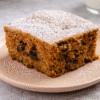
Applesauce cake is a moist, spiced sheet cake whose origins can be traced back to seventeenth- and eighteenth-century New 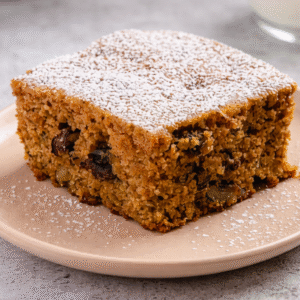 England colonial America, where apples were abundant. Drawing from European fruitcake traditions, early cakes used apples or homemade applesauce to bind batters rather than relying on hard-to-get eggs and fats, resulting in moist, long-keeping, spice-infused baked goods. Prior to the early twentieth century and the advent of commercial applesauce, American households stewed and strained local apple varieties specifically for use in baking.
Printed recipes for applesauce cake in the U.S. began to appear in magazines and cookbooks around 1905, coinciding with the expansion of commercial applesauce production. These recipes highlighted the cake’s moist texture while using minimal fats, setting the stage for widespread adoption during times of scarcity.
Applesauce cake became especially popular during World War I, when eggs, butter, and sugar were rationed. A 1917 recipe attributed to Anne Byrn called for no eggs and only two tablespoons of butter, relying on applesauce for moisture and sweetness, while cinnamon, cloves, and nutmeg provided flavor.
World War II brought even stricter rationing—especially with sugar, which was limited to about eight ounces per person per week—further cementing applesauce cake as a patriotic alternative. After the war, its popularity lingered through the Depression era and into the 1950s, before sliding out of favor with the advent of boxed spice cakes from major brands.
Today, applesauce cake is remembered by some, but few, can tell you how it actually tastes.
Chocolate Biscuit Pudding
Chocolate biscuit pudding is an old-fashioned comfort dessert 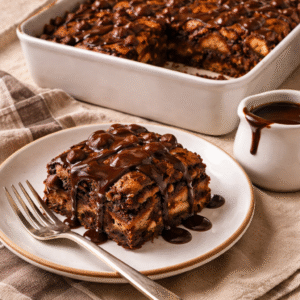 once popular in the American south, particularly in Appalachia communities. The Southern version is a baked dessert casserole similar to bread pudding, made using leftover buttermilk biscuits.
A second no-bake version—likely influenced by European refrigerator desserts—also appeared in American kitchens thanks to its simplicity and minimal equipment.
The Southern variety is prepared by mixing crumbled biscuits with a custard of milk, eggs, sugar, butter, vanilla, and cocoa. The mixture is then baked in a 375℉ oven until set and slightly browned. It is typically served warm, often with chocolate sauce on the side.
No-bake chocolate biscuit pudding is usually made with tea cookies, such as Maria biscuits, or graham crackers dipped briefly in milk and layered—often seven layers— with a rich chocolate pudding. The dish is then refrigerated overnight to allow the biscuits to soften and flavors to meld.
Chocolate biscuit pudding began its decline in the 1980s as tastes shifted and commercially produced puddings and snack packs became widely available. By the end of the 1990s, the once-common dessert had all but disappeared from American tables.
Wacky Cake
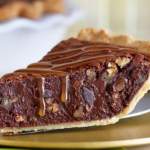
Also known as Crazy Cake, Cockeyed Cake, War Cake, or Depression Cake, Wacky Cake was created during the Great Depression of the 1930s, when dairy and eggs were scarce and expensive. Its popularity surged again during World War II rationing.
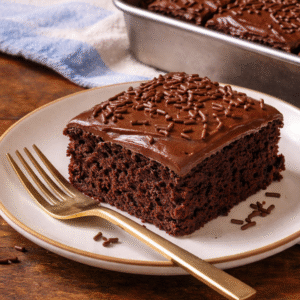 Not only does Wacky Cake contain no eggs, butter, or milk, it is also remarkably easy to make—dry ingredients are mixed directly in the baking pan, three divots are made for the vinegar, oil, and vanilla, water is poured over the mixture, and everything is stirred together and baked. The result is a surprisingly moist, brownie-like cake that can be topped simply with powdered sugar or basic icing.
Although Wacky Cake’s popularity waned in postwar years, it resurfaced during the 1960s and 1970s, even appearing in school lunch programs. Its most recent revival came during the COVID-19 pandemic.
Peanut Butter Pie
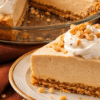
Inspired by “peanut pie”—a crunchy, syrup-based, pecan-like dessert promoted by makers of Karo corn syrup—peanut butter 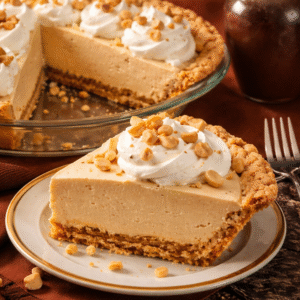 pie originated in the American South during the 1940s. While its exact origin remains unclear, this creamy pie, typically filled with peanut butter, cream cheese, and whipped cream, quickly became a household favorite, particularly in Virginia and North Carolina. By the 1960s, its popularity had spread nationwide.
Former First Lady Rosalynn Carter was famous for her version of peanut butter pie, which she often served during her time in the White House. Frequently described as “peanut butter fudge in a pie shell,” her recipe featured a meringue topping.
Today, there are countless versions for peanut butter pie. While many are undoubtedly delicious, what you rarely encounter anymore is the classic refrigerator-set version my momma made for the family.
Prune Whip
The earliest known reference to prune whip actually dates to an 1879 Pennsylvania newspaper. By the early twentieth century, it 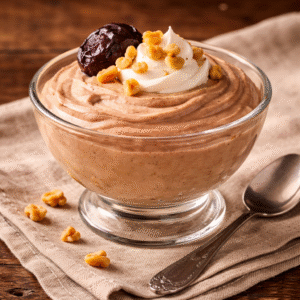 appeared regularly in cookbooks, including the 1918 edition of The Fanny Farmer Cookbook. During the Depression and World War II years, prune whip gained popularity because the sweetness of prunes helped compensate for scarce and rationed sugar.
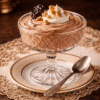
Traditionally prepared using whipped egg whites to create a light, mousse-like texture, postwar versions in the 1950s often included gelatins or whipped cream instead. President Dwight D. Eisenhower famously declared prune whip to be one of his favorite desserts.
Today, this once-fashionable dish is often regarded as bizarre by modern tastes, though some contemporary chefs have attempted revivals using mascarpone and spirits such as Armagnac.
So there you have it—just a few desserts I rediscovered in my momma’s collection of recipes. Some you may remember fondly, others many of you may never have tasted at all. For readers with a penchant for retro dishes, I’ve linked this story to copies of the original recipes from her collection.
Happy cooking!