Eggnog: A Holiday Tradition with a Spirited Past
As far back as I can remember, there are two things I never saw my father do—swear or get drunk. That’s not to say he was a strict teetotaler, but alcohol was something he partook of only a few times a year at his brother’s or uncle’s home. Even then, never more than a sip or two—something I always respected him for.
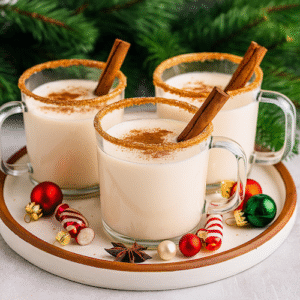
There was one beverage I know he did enjoy, and that was a glass of slightly warm eggnog during the holiday season, though I’m not sure if it contained any rum or not (rum was the only booze I ever knew us to have). What he liked was eggnog’s rich, creamy taste, always finished with a sprinkle of nutmeg.
Though today eggnog is most often associated with Christmas gatherings and holiday cheer, its roots trace back centuries and across continents. The drink we know as eggnog likely evolved from “posset,” a medieval English beverage made with hot milk curdled by ale or wine and flavored with spices. By the 13th century, eggs and figs were being incorporated, transforming posset into a richer, more custard-like mixture. Because eggs, milk, and spices were rare and costly in those days, the drink became linked to prosperity and celebration. To raise a cup of posset was to signal wealth and festivity.
 When English colonists brought the tradition to America, the recipe took on a new identity. The colonies offered something Old England could not: an abundance of farm-fresh eggs, milk, and inexpensive rum imported from the Caribbean. Rum quickly became the spirit of choice in colonial nogs, replacing the more expensive brandy, sherry, or Madeira. Some historians suggest that the American fondness for eggnog was born out of both necessity and ingenuity—settlers adapting Old World traditions with the resources of the New World.
The very name “eggnog” seems to have grown out of this colonial setting. “Egg” was obvious enough, but “nog” is thought to come from “noggin,” a small wooden mug used to serve strong ale. Over time, the term stuck, and by the late 18th century, “eggnog” was firmly in the American vocabulary.
By then, the drink had also cemented its place in American holiday culture. Even George Washington had his own famous recipe, a potent concoction calling for rum, whiskey, and sherry alongside the usual eggs, cream, and sugar. His version was said to be so strong that guests were cautioned to drink carefully, lest the festive cheer overwhelm them too soon. The drink’s association with Christmas grew steadily during the 19th century, especially in the Southern states, where family gatherings often featured a bowl of nog as the centerpiece of hospitality.
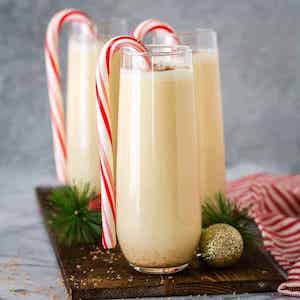 The 20th century brought eggnog to the masses as commercial dairies began bottling nonalcoholic versions for grocery store shelves. This made it possible for families across America to enjoy eggnog without the labor of separating eggs, whisking yolks, and tempering cream. Though purists sometimes lamented the loss of homemade versions, bottled eggnog ensured its survival as a seasonal staple, available from Thanksgiving through New Year’s Day.
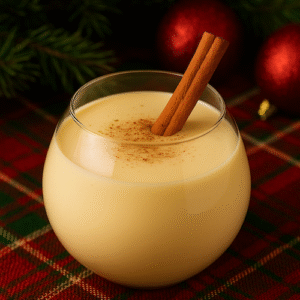
Today, eggnog continues to straddle the line between past and present. For some, it remains a homemade tradition, whisked together with care and often fortified with a splash of bourbon or rum. For others, it’s a convenient carton from the dairy aisle, perhaps enlivened with a sprinkle of nutmeg on top. However it’s served, eggnog remains a nostalgic symbol of the holiday season—a drink whose rich history matches its richness in the glass.
 Every holiday season, when I catch the scent of nutmeg drifting up from a glass of eggnog, I can’t help but think of my father, quietly savoring his favorite drink.